 Weather today
US Legislators Appeal to House Foreign Aid Subcommittee to Increase Aid to Armenia and Nagorno-Karabakh

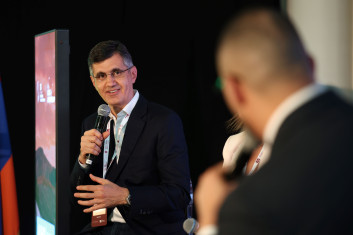
With Congressional appropriators in the early stages of crafting the Fiscal Year 2011 (FY11) foreign aid bill, Congressional Armenian Caucus Co-Chair Frank Pallone (D-NJ, pictured) was joined by 27 of his US House colleagues in urging the inclusion of a series of provisions aimed at strengthening US ties to Armenia and Nagorno-Karabakh and bolstering the prospects for a lasting regional peace, reads a press release issued by the Armenian National Committee of America (ANCA).
"We want to thank Representative Pallone for his leadership and to express our appreciation to each of his colleagues who joined in this effort, including, of course, Armenian Caucus Co-Chair Mark Kirk, for helping to ensure that the foreign aid bill properly reflects America's support for Armenia and Nagorno-Karabakh," said ANCA Executive Director Aram Hamparian.
"We look forward to working toward the adoption of the vital foreign aid priorities outlined in this letter."
In a March 22 letter to Foreign Operations Subcommittee Chair Nita Lowey (D-NY), a longstanding supporter of the US–Armenia relationship, and Ranking Republican Kay Granger (R-TX), lawmakers cited six key foreign aid priorities, including:
- Increasing US assistance to Armenia to $70 million in Fiscal Year 2011.
- Directing USAID to spend $10 million in Fiscal Year 2011 for humanitarian and development programs in Nagorno Karabakh.
- Enhancing Section 907 restrictions on US assistance to Azerbaijan by narrowing presidential waiver authority of the measure.
- Upholding the Committee's long-standing tradition of maintaining parity in military funding between Armenia and Azerbaijan, which includes $4 million in FMF and $1 million in IMET funding for Armenia in Fiscal Year 2011.
- Ending restrictions on travel, contacts, and the free exchange of ideas between US officials and the democratically elected leaders of Nagorno-Karabakh.
- Requesting language urging Azerbaijan to support confidence-building measures that facilitate interaction among the parties, in order to address regional security, resource management, infrastructure, development and people to people programs.





 Studio One