 Weather today
Armenia is a ‘worse copy’ of Russia: Arman Melikyan

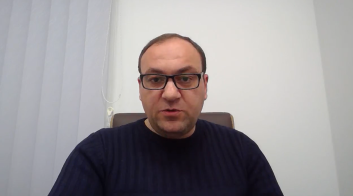
Russian President Dmitry Medvedev’s upcoming visit to Armenia and the informal Collective Security Treaty Organization summit to be held in the framework of that visit are indicative of new developments in the region, though in reality it is developments expected in Armenia-Russia relations that matter most for Armenia, former Foreign Minister of the Republic of Karabakh Arman Melikyan told a press conference today.
Ahead of Mr Medvedev’s upcoming visit to Armenia, in his words, much is being spoken about the possible extension of the contract that allows the deployment of Russian troops in Armenia.
“As long as Armenia continues to be the anti-Turkish stronghold in the South Caucasus, the existence and the extension of such a contract is quite clear and logical given the interests of a lot of countries, specifically those of Russia,” said he, adding that as long as this situation remains the same, naturally enough, Armenia would like to see these Russian military bases in its territory.
According to Mr Melikyan currently Armenia is not able to translate these anti-Turkish atmosphere into another qualitative situation, as Armenia is what he called “unfortunately, a worse copy of Russia.”
In his words, Russia, still having its interest in the region, continues to be a power that does not have an ideology, and in that sense Russia’s future is obscure. The bottom line is that today Armenia may sign an agreement with Russia - a country which may well not be the same in 5 or 10 years time.
“The way that has been chosen by Russia, which in fact seems to not have finally oriented itself, is posing threat to us. On the one hand we should be able to ensure our security in our relations with Russia, as far as our geopolitical role is to be a stronghold of anti-Turkism, on the other hand, we should be able to resist to this ideological approach by Russia, which is quite simple: in fact we should be democratic and shouldn’t sacrifice our sovereignty to today’s domestic situation in Russia,” explained Arman Melikyan.

 Studio One