 Weather today
IMF forecasts 4 per cent economic growth in Armenia

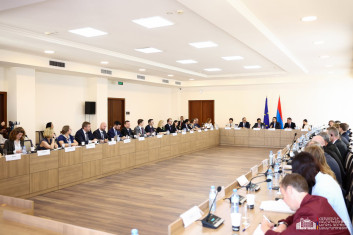
An International Monetary Fund (IMF) mission headed by Ms. Ratna Sahay, Deputy Director of the IMF's Middle East and Central Asia Department, visited Yerevan from 9?24 September 2010, according to a statement released by IMF.
According to it, the team completed the 2010 Article IV Consultation discussions and reached a staff-level agreement with the authorities on their economic reform program under the First Review of the Extended Fund Facility (EFF)/Extended Credit Facility (ECF) Arrangements with the Republic of Armenia.
"The total financial commitment under this IMF-supported program amounts to SDR 266.8 million (about US$410 million). The IMF's Executive Board is expected to consider Armenia's request for the completion of the first review and conclude the Article IV consultation in November 2010. Upon approval, a disbursement of SDR 36.2 million (about US$56 million) would be made available to Armenia," reads the statement.
Further is says that Armenia's economy is slowly recovering from a sharp downturn of over 14 percent last year. While rebounding trade and remittances are reviving industry and services, agriculture has been hit hard by adverse weather conditions. As a consequence, according to the statement, the overall economic activity is expected to grow by about 4 percent in 2010 and 4½ percent in 2011. Reflecting the pick-up in activity, credit has also begun to flow to the private sector.
"The contraction of agricultural output, together with the spike in imported wheat prices, has translated into higher food prices. With nearly half the weight in the consumer price index, higher food prices have pushed annual inflation to 9.6 percent in August. Looking ahead, inflation is expected to moderate and decline to about 7 percent by the end of this year.
"During the 2009 crisis, the authorities successfully mitigated the negative impact on the population by appropriately pursuing countercyclical fiscal policy. These policies inevitably lead to a widening of the deficit, an increase in public debt, and contributed to the deterioration in the current account balance. With the onset of the global crisis and a postponement of the exchange rate adjustment in 2009, dollarization increased rapidly.
"As a consequence of domestic and external developments in 2009 and this year, important medium term challenges have emerged. There is a need to consolidate public finances to ensure fiscal and debt sustainability. Given the fragile economic outlook of its key economic partners--Russia and the European Union-there is greater urgency to step up broad-based structural reforms to boost competitiveness and diversify exports so as to raise growth rates and reduce poverty further. Maintaining macroeconomic and financial stability and deepening financial markets in local currency will be critical in helping to dedollarize the economy and raise the effectiveness of monetary policy."





 Studio One