 Weather today
Nations hold Libya talks in Turkey

Turkey's foreign minister applauded recent Libyan rebel advances against the forces of Colonel Moammar Gadhafi at an international diplomatic conference Thursday to plan for the post-Gadhafi era in Libya, the CNN reported.
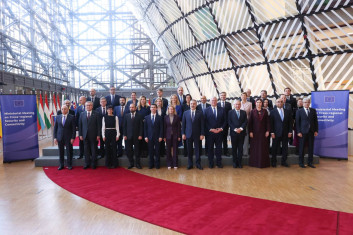
Diplomats from 29 countries are in Istanbul for the meeting of the Libyan Contact Group, a coalition of Arab and European governments, as well as the United States and Turkey.
Representatives from Nato, the African Union, United Nations, European Union, Arab League, Gulf Cooperation Council and Libya's National Transitional Council – the rebel Libyan government – are also present.
"Today we are all proud and pleased with the ground-breaking developments on the ground" in Libya, said Turkish Foreign Minister Ahmet Davutoglu as he opened the meeting.
"The military victories of the National Transitional Council against the Gadhafi forces in Tripoli have brought the Libyan people closer to the noble cause that they been fighting for – freedom, justice, dignity and democracy."
Turkey is one of the co-chairs of the Libya Contact Group.
The governments of many of the countries in attendance threw their weight behind the Libyan rebels by freezing the assets of Moammar Gadhafi's government and pledging military and financial support to the NTC, based in Benghazi.
There is significant Arab representation at the session, with diplomats from Bahrain, Jordan, Morocco, Lebanon, the UAE, Qatar and Kuwait. Egypt is listed as an observer.
Turkey's top diplomat announced Gadhafi had "exited the political scene," and called on the international community to recognize the NTC as the sole representative of the Libyan people.
"Its flag should be raised at the United Nations headquarters in New York, hopefully the next UN General Assembly," Davutoglu said, referring to the tri-color banner adopted by the Libyan opposition.
Davutoglu also said unfreezing Libyan financial assets and handing them over to the NTC was of "critical importance." He urged the UN Security Council to take the steps to make this transfer of funds possible.
The cash-strapped rebel leadership has already been lobbying the United Nations and several countries to release Libyan money frozen in foreign banks by the UN Security Council.







 Studio One