 Weather today
Armenian deputy FM: Each country has its text in EU negotiations

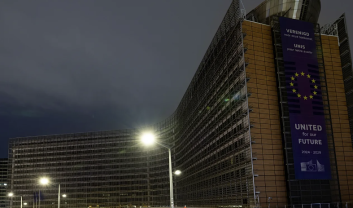
Every country negotiates its own text with the European Union, a deputy foreign minister has said, comparing Armenia’s EU integration efforts with those of Ukraine.
“Each country negotiates a separate agreement, and the content is naturally different. The Armenia-EU talks over the Association Agreement kicked off in July 2010, and it is more than three years we have been in a negotiation process. Armenia negotiates its text, in accordance with its interests and approaches. If the texts were the same, why would we be negotiating?” Zohrab Mnatsakanyan told Tert.am, commenting upon Institute of CIS Countries Director Konstantin Zatulin’s recent remark that he isn’t properly aware of the contentual aspect of the agreement.
Asked whether the agreement with Armenia contains other key approaches apart from the harmonization of laws with the EU standards, the deputy minister said that the document is anchored on the strong relations and the common values between the Union and Armenia.
“The Association Agreement will be aimed at deepening Armenia’s relations with the EU in several sectors. It will cover particularly cooperation criteria addressing democracy, trade and economic [cooperation], human rights, justice and several other sectors,” he said.
As for the Deep and Comprehensive Trade Area deal, Mnatsakyan noted that the process, which is now in its final stage, has its own negotiation format. “The negotiations over it are still in progress, and we are hopeful they can be finalized. In addition, there are several technical and legal matters that need to be amended and developed,” he explained.
Asked to comment on Zatulin’s statement that Armenia will lose its economic sovereignty in case of joining the agreement, the Armenian official said, “The agreement is between Armenia and the EU, and Armenia is negotiating as an independent side. So we cannot be said to be losing our sovereignty, including the economic one.”
Mnatsakanyan further spoke of the procedural aspect of the process. “Such agreements are usually initialed – which signals the end of the negotiations – and later prepared for signing, which is followed by a ratification phase, with each party following corresponding national procedures.”
Commenting on the Armenian authorities’ plans for discussing the agreement, Mnatsakanyan said that public hearings with political forces and the civil society are being periodically held to raise awareness of the process.






 Studio One