 Weather today
Armenia’s telecommunication industry: findings, problems and prospects

Ameria group of companies recently presented its regular survey into Armenia’s telecommunication industry, its current situation, challenges and prospects.
The survey involves cable TV, mobile and wire telephone communication as well as the use of gadgets (cell phones, laptops, tablets, TV sets, etc.) in Yerevan. This industry is rapidly developing, but the statistics on Armenia is not full.
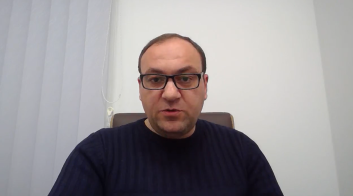
Tert.am interviewed Mr. Haykaz Fanyan, Advisor, Ameria Management Advisory Services.
What’s the reason for selecting the telecommunication industry for the survey? What questions is the survey supposed to answer for the industry and those interested in it?
The telecommunication industry is Armenia’s leading and dynamically developing industry. Our survey enables us to conduct an in-depth analysis of the industry, form a clearer idea of competition and find out more attractive markets for the industry’s development. The survey will also help enterprises to develop a flexible strategy to plan their further activities and meet possible challenges.
Besides, we have tried to present the situation in the industry “as seen through the eyes of the consumer.” That is, the survey involves more than 1,000 respondents, which shows the consumer behavior and allows making forecasts for the industry.
What problems did the survey focus on?
Armenia’s telecommunication industry is subject to regulation and is being supervised by the Public Services Regulatory Commission. In 2011, the Commission decided to differentiate active users. However, according to the information at our disposal, in presenting technical reports, mobile operators only partially meet the requirements envisaged by the decision. The companies, which are subsidiaries of transnationals in Armenia, prepare technical reports applying their own methods. In particular, different approaches are used in calculation of active users (due to different periods in consideration), average revenue per user (ARPU), etc. I think that, to have a clearer picture of the industry, we need to develop a methodology of preparing technical and economic reports.
Moreover, cable communication is one of the most important subindustries of the telecommunication industry, and we are still collecting information on this relatively new subindustry. Armenia’s Statistical Service is hardly keeping statistics on this subindustry, and whenever it is, it refers to the revenues only. However, a decision has been made on changes in report templates, which implies that we will have detailed data on this subindustry next year.
What interesting trends did the survey reveal? Are there any findings that you experts found surprising?
There are certainly interesting revelations; I will introduce some of them. The survey found that 86 percent of the population aged 15-69 has only one mobile phone, with only about 12% using two. We expected however, a greater number of people to have two or more mobiles. It is further interesting to find that among those aged 25-34, one in four uses mobile internet during more than an hour a day. A surprising revelation for us was that the wire telephone communication has not lost its actuality in Armenia. Around 69% of those aged 15-69 use that form of communication every day.
How about the competition in the telecommunication sector?
It is, first of all, worthwhile to mention that the structural markets in this sector (mobile telecommunication, wire telephones, internet access service, cable TV) see different levels and different degrees of intensiveness of cooperation. Although the Armenian telecommunication’s main structural market, i.e. – the mobile market, is characterized by the oligopolic structure and there are many financial and regulatory barriers for market entrants, the telecommunication market is one of the economy’s most competitive sectors. Moreover, as our study reveals, the Armenian telecommunication market is governed by the “three and four rule”, which implies the presence of three main stakeholders on the market, with the shares of the first, Viva Cell-MTS (approx 60%), four times topping those of the third, Orange. And that in turn testifies to the presence of an optimal competitive environment.
Mobile number portability service was launched on March 1. What are your expectations and forecasts in this regard?
Our surveys conducted in Yerevan allow us to state that only 10 percent of the population has expressed a willingness to use that service. But other countries’ experience demonstrates that the real situation is going to be more restricted – five to seven percent. Nonetheless, we do not rule out a different situation either, given especially that the operators actively work in that direction. For example, the market’s leader, VivaCell MTS, has initiated a campaign to protect its competitive position, which means it is working towards preventing its customers’ outflow, while Beeline and Orange are trying offensive marketing. The competitiveness measures have not been fully resolved yet, but it is already clear that the competitiveness will grow tenser. By the way, the outcomes of our survey in Yerevan demonstrate that VivaCell MTS subscribers are relatively less inclined to use the mobile number portability service.
B24.am in cooperation with Circle.am regularly publishes data on the ISP market. How do your findings correlate to their publications?
We have read these publications but our findings are different. These websites use technical accounting methods, i.e. keep track of IP visits to the websites registered in their database, but the fact is one and the same user may access web from multiple IP addresses. Our estimations are based upon technical and economic reports published by the companies exactly specifying the number of users.
According to your expert observations, what changes are pending in the telecom industry of Armenia, in particular, driven by the entry of the fourth market player?
We expect only minor changes, if any. The fourth operator, Ucom, is mainly supported by the local base, that is, it is not affiliated with any international company. In our opinion, it may face serious challenges, including marketing expertise, technical issues, etc. This doesn’t mean the company is constrained to its current position. A good competitive strategy may win certain market share for the company. Anyway, one thing is definite: the mobile phone and mobile internet services market won’t witness the same revolution that Ucom did in the internet services market.
Another change I’d like to mention is possible diversification of services by the mobile operators. They are likely to enter cable TV market to explore its huge potential (according to our estimations, in a couple of years the number of cable TV viewers in Yerevan only will increase by 38,000), given the experience of the parent companies of the TOP 3 (Viva Cell-MTS, Beeline, Orange) in other countries. Actually, while Viva Cell-MTS and Orange do not currently employ such technologies, for Beeline this shift is rather feasible.
According to our estimations, it is the cable TV market that will see most dramatic changes with the minor players being left out.





 Studio One