 Weather today
Genocide centennial and Armenian cinema

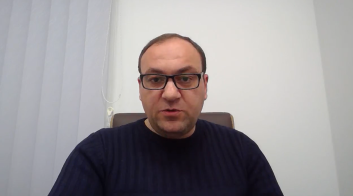
In an interview with Tert.am, actor, scriptwriter, producer and singer, Honored Artist of Armenia Mikael Poghosyan addressed a number of issues, particularly the work to be done by Armenian art workers and directors throughout the world as the centennial of the Armenian Genocide nears.
Mr Poghosyan, as the 100th anniversary of the Armenian Genocide nears, what are Armenian art workers and directors throughout the world supposed to do?
This is a topic no Armenian can be indifferent to. What is there at actors’ hand? They need a script, an offer and so on. Rather, it is the official tendency that is in question. They must realize that this topic must be filmed and interpreted. But it must be a much more serious interpretation than just speaking of pogroms or blood. A more contemporary approach is needed, which, I think, is not being shown now. And even if anything is done now, it is a commonplace thing. I mean the Italian film (means The Lark Farm (Italian: La masseria delle allodole), an Italian drama film about the Armenian Genocide, by Paolo and Vittorio Taviani), though the response is spreading throughout the world. But we, Armenians, must interpret this all ourselves, in our own way.
Do you mean “elite movie”?
Not “elite movie,” but in terms of interpretation. It must first of all be a psychological movie, not one with bloody scenes. I am trying to shoot a 10-15-minute movie, and if I can find money, I will shoot it. It is going to be a movie with several genres mixed in it, if I can make it a reality. In any case, I believe that any Armenian doing creative work should voice his or her opinion of the topic.
If writers are supposed to show civil maturity at this moment, directors are “given more time” to produce movies. Do film directors respond to the political developments in our country – at least as individuals?
No, they do not. They shoot films about their personal problems, which cannot become panhuman ones, to say nothing of their being of interest to Armenians. They are shooting films about their own complexes. And it is not intended either for Armenians or for any other peoples or for a festival. Films are not properly selected.
Armenia is now surviving one of its hardest days, with the [tense] situation on the border bringing it face to face with a geopolitical choice (as 100 years ago), and the entire world changing dynamically. Do you think our cinema reacts to the problem?
Our cinema today has to first of react to, and speak of, the high and great values; it is necessary to raise [the level] of people. Positive things have to be addressed first. We are not the kind of state to afford shooting [a film] on both this and that. We cannot afford producing a movie like Nymphomaniac. So the television today must be able to give comfort to the Armenian in a way; we are in a kind of moral decline, with people facing a panic. So we have to live with today’s life. Instead of seeking to meet the viewer’s demand for a cheap comedy or soap operas, it is necessary to speak of those important things to encourage the human being and further strengthen his or her trust. That choice and the scenario are very important; and it is first of all for the Ministry of Culture to understand and realize that.
Any competition process sees – for some objective or subjective reasons – certain dissatisfactions voiced, but this is never the case with the Golden Apricot [International Film] Festival. So did all the prize-winning movies unconditionally and indiscriminately deserve all that? Are they beyond any doubt?
I don’t know if you are aware of it or not, but the organizers have nothing to do with that. What the organizers do is to invite a jury, especially for international [events]; I myself have been in a jury, so I am aware of how it’s done. The jury for this particular nomination convenes, makes its decision, and that’s all.
Besides, renowned art critics come here in the frameworks of that festival to conduct master classes for actors and directors. What are the benefits of that?
Those master classes are very important. They are a kind of … I don’t want to speak much about contemporary directors who create and teach, but the spirit they bring is something unimaginable. There weren’t things of the kind when we were [younger], so I always experienceս that thrust.
Money for movies is something that the entire world lack. The National Cinema Center of Armenia gives certain money, but I don’t think they are enough.
The problem is not about that; the cinema center cannot run out of breath. It is offered a state budget whose distribution it has to manage itself. But every single distribution and every single slight amount cannot make up [the costs for] even a third of a film. So it acquires a formal character. Even if the entire budget is spent on one movie, it may not be enough again; that budget is so miserable that the Cinema Center is not to blame for that.

 Studio One