 Weather today
NATO PA opens Rose-Roth seminar in Yerevan

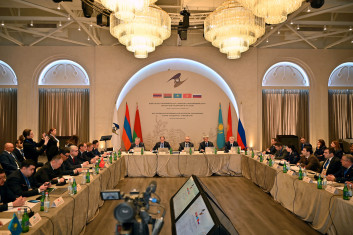
The NATO Parliamentary Assembly, in collaboration with the National Assembly of Armenia, is conducting its 89th Rose-Roth seminar in Yerevan to address peace and security issues.
The three-day event, entitled “Security and Stability in the South Caucasus: Fostering Enduring Regional Peace”, focuses on current and future challenges and cooperation issues. No Azerbaijani delegates are in attendance. Turkey also had earlier ruled out its participation, citing the recent parliamentary elections as a reason for non-attendance.
An opening speech was delivered by the head of Armenia’s delegation to the Assembly, Koryun Nahapetyan (Republican Party), who emphasized that the country is for the second time hosting such an event. The parliamentarian rated high the current level of the Armenia-NATO cooperation which he said is anchored on the "Partnership for Peace" principle.
Highlighting the importance of all the topics on the agenda, Nahapetyan said that key issues for Armenia are the cooperation with the Euro-Atlantic community, its mediatory role in the Nagorno-Karabakh conflict settlement process, the establishment of rules of conduct conduct as part of defense reforms in Armenia and NATO partnership in the South Caucasus.
He added that the seminar will address also the situation in the Middle East, the challenges posed by the Islamic State and their possible impact on the Armenian diaspora, as well as the energy security issues in the South Caucasus and other regional developments and problems.
Introducing the participants, Nahapetyan said that the seminar is attended also parliamentarians from NATO member and partner countries, as well as members of the Nagorno-Karabakh National Assembly, representatives of regional organizations, analytical centers and ambassadors.
President of the Armenian National Assembly Galust Sahakyan later greeted the participants, highlighting the urgency of security and stability in the South Caucasus. The parliament speaker reiterated Armenia’s position as a champion of freedom and peace and a country believing that the elimination of dividing lines can promote regional cooperation based on mutual interests.
Addressing the Nagorno-Karabakh conflict, Sahakyan reaffirmed Armenia’s intention to reach a peaceful solution based on the recognition of the country’s right to self-determination and the implementation of norms of international law.
“We are champions of a peaceful settlement,” he said.
Commenting on the Armenia-Turkey relations, the speaker restated the Armenian authorities’ repeatedly voiced demand for establishing a dialogue without preconditions.
“I am sure we will eyewitness interesting debates in the days to come,” he added.
Speaking further, Paolo Alli, the PA vice president, said they expect an effective debate at the current meeting. He said he thinks that the initiative to conduct the Assembly’s second seminar in Armenia is a sign of progress and proper cooperation. Mr Alli assured the participants that the alliance’s efforts are targeted at establishing enduring peace in the South Caucasus. He described the forum as a good platform for an open and constructive dialogue.
The NATO official further called for efforts towards promoting a peaceful settlement of regional conflicts. Admitting that they recently observed escalations, the PA vice president reiterated the alliance’s strong opposition to attempts to seek military solutions.
He described Azerbaijan’s failure to attend the meeting as a backward step following the last seminar hosted by the country (to which Armenia had sent participants).
Mr Alli said told the participants that their discussions will focus on the challenges for Armenia in the short- and long-term perspectives.






 Studio One