 Weather today
Artsakh ‘very close’ to international recognition – Russian bloggers

A number of foreign bloggers, who recently visited Nagorno-Karabakh (Artsakh) to attend the celebrations marking the 30th anniversary of the national-liberation movement, promise to return to the country notwithstanding Azerbaijan’s "threatning black lists".
Tert.am has talked to Igor Shiryaev, an editor for the Russian magazine Interestniy Mir (Interesting Workd), and Alexey Vesyoly, a Russian blogger.
Mr Shiryaev says was in Artsakh also in 2009 "in a trip which offered me a unique chance to visit most of the country to get magnificent impressions”.
“I fell in love with that country, its people. I later published a series in Interestniy Mir, giving myself a promise that I would return. For reasons not quite depending on myself, I was able to keep that promise only in 2018, [about] ten years later. And I feel happy to visit Artsakh. I have again promised myself to return to the country.”
The Russian journalist describes Artsakh as a unique “power center”.
“Having passed across very beautiful and exotic sites on this planet, I also visited one of the rare places which I consider really 'genuine'. Certainly, there are higher mountains in the world, and countries which richer landscape, but Artsakh is real,” he said.
Shiryaev also shared his positive impressions of the Artsakh people, who he said never changed for the worse “despite surviving lots of hardships”.
“They never turn to others to ask for anything. They just want to be left in peace and to live in the country they consider they fatherland. I share that desire of theirs,” he added.
The journalist said he surprisingly feels much safer and freer in Artsakh compared to other places on the planet.
“That’s a paradox - given that country’s dramatic past and not quite easy future - but that’s a fact. But I understand that a war may erupt at any moment. [Should that ever happen again], I will do everything within my power to offer my help to Artsakh.”
Shiryaev said he treats the country as a “new kind of sovereign republic on planet Earth”, which paved its way to state-building through the liberation movement and the 1990s war.
“My subjective opinion is that Artsakh is very close to its international recognition there are fact which, some way or another, have to be taken into consideration,” he added.
The Russian journalist said his knowledge of history never allowed him to treat Artsakh as an Azerbaijani territory.
“That’s a historical and political fact. Yes, the defeat in the war is insulting to Azerbaijan, but they must be able to accept their defeat,” he said, considering the Azerbaijani authorities blacklisting policies "all but a sign of absurdity".
“A tourist far from politics can practically circumvent that obstacle of being ‘blacklisted’. [To make sure they are doing nothing wrong], they may simply choose to visit Azerbaijan first - before conducting a trip to Artsakh. And those who are faithful to Artsakh deep in their hearts will consider it their honor to find themselves on Azerbaijan’s ‘black list’. I always remember, for example, that [world-famous Spanish soprano] Montserrat Caballé is on the same blacklist. And so are lots of other merited people. To be on the same list with them is an honor for me,” he said.
Aleksey Vesyoly who was on his first visit to Artsakh, says he was highly impressed by the local people’s hospitality.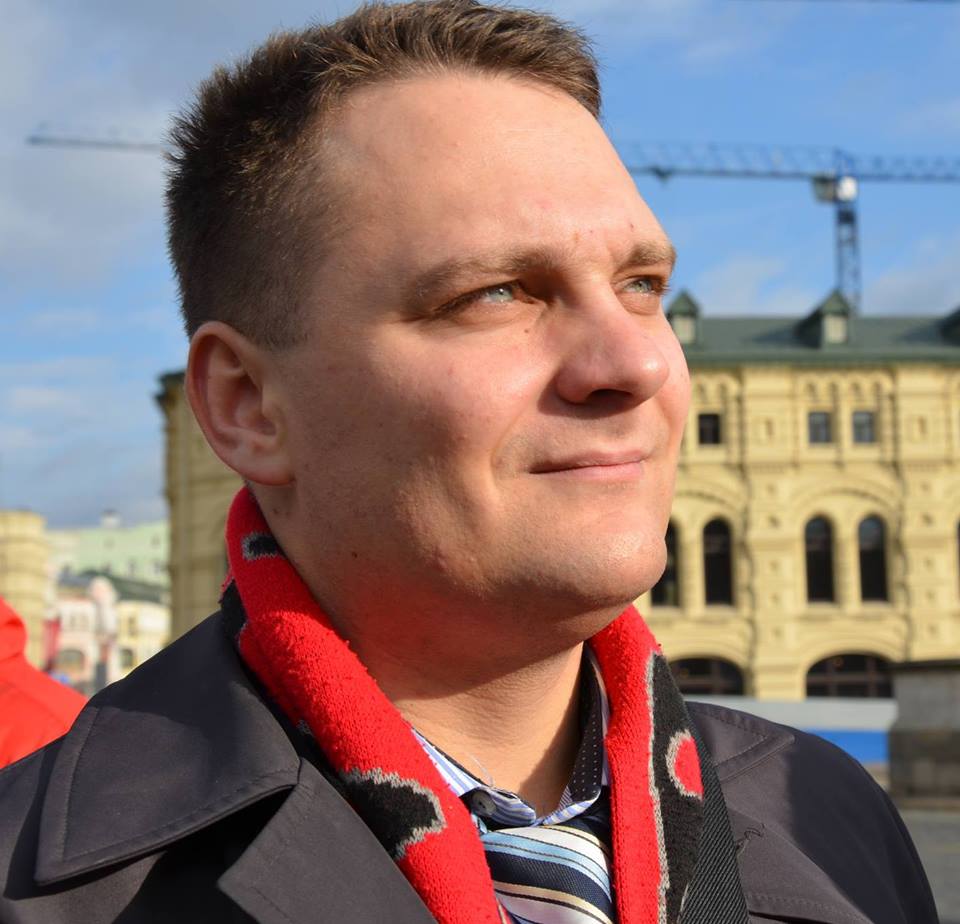
“The mountains there look so high as though they are above the clouds. That gives you a sense of freedom. I liked their very clean air, which has really a healing effect.”
The blogger said he appreciated also the country’s culture and "unique but sill unrecognized historical heritage".
“I am impressed by the uniquely mixed European-Iranian architecture of Shushi, the [Yukhari Govhar Agha] Mosque and historical Karabakh. I see they have a potential [to build a secure] future through social entrepreneurship and sustainable development. I have met brave people who have a strong will, but I can never rule out any expectation of war,” he said.
Addressing Azerbaijan’s “black lists”, the blogger stressed the importance of developing a "comprehensive understanding of facts and maximum avoiding emotions" to give the right evaluation to circumstances.
“Objective journalism requires that both sides of a conflict receive an appropriate coverage to allow us to look upon the problem from different angles, publishing different opinions, facts and proofs, and also promoting critical thinking. I personally have a desire to visit Azerbaijan, and I am hopeful to have that opportunity in the near future,” Vesyoly added.

 Studio One