 Weather today
EU faces €70 billion Ukraine funding headache as war costs soar

The European Union is scrambling to find an additional €70 billion for Ukraine next year, after Russia's escalating assault on the country and its economy rendered the bloc's existing financial support plans insufficient.
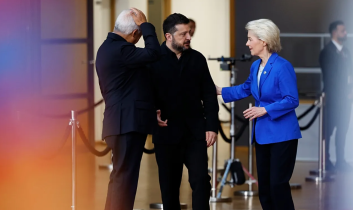
At the end of a two-day summit last week, EU leaders heard directly from Ukrainian President Volodymyr Zelenskyy about the scale of the shortfall.
"The war will cost €155 billion next year. And we need at least €70 billion more from you: for defence, for weapons, and for our resilience. This is a realistic amount. And I ask you to find this support. It will help us hold Russia back," he said.
According to Zelenskyy, the extra injection of cash will help Ukraine ramp up domestic production of its cutting-edge drones to stop Russia's advances on the battlefield, disrupt its supply chains and undercut its war apparatus.
"We really need at least €70 billion additionally for next year," he added.
The appeal struck a chord. EU leaders tasked the European Commission with exploring ways to plug the gap, which is considerably larger than Brussels had anticipated.
Until now, the bloc based its support on the €90 billion loan that leaders signed off last December. The loan was designed to cover two-thirds of Ukraine's financial and military needs for 2026 and 2027 combined, with other allies covering the remaining third.
Crucially, the Commission devised the loan assuming that the war would end sometime in 2026. Instead, Moscow has intensified its offensive, including daytime attacks aimed at crippling Ukraine's already fragile economy.
Kyiv has spent weeks warning that it will need an additional $32.6 billion to support its budget and $45 billion for its armed forces next year – a combined $78 billion, or approximately €70 billion.
Brussels initially declined to comment on the staggering figure. But after several rounds of technical discussions, it has accepted the estimate and concluded that the money must be found if Ukraine is to sustain its war effort.
The €70 billion would come on top of the €45 billion the EU plans to disburse under its existing loan, as well as several billion euros from other programmes.
Faced with a swelling bill, Brussels has been quick to stress that the €70 billion will be a "joint effort" with other allies, such as the UK, Norway, Canada and Japan.
"We always said that we cannot walk this alone. We cannot do this all alone. Therefore, our partners in general must step up," a Commission spokesperson said.
"They have to come forward with pledges, and they have to deliver on those commitments. This is very important."
It is not yet clear how much of the €70 billion the EU will provide, given that the previous split of two-thirds vs one-third has not worked out as planned. Nor is it clear how quickly Kyiv will need the money. What is clear is that the options for raising such a vast sum at short notice are severely limited.






 Studio One