 Weather today
EU tying enlargement to strategic alignment puts Serbia, Georgia and Turkey in a tight spot

The European Commission is putting growing weight on how closely candidate countries follow its foreign and security policy. In its annual assessment reports, Georgia, Turkey and Serbia stand out for their lack of alignment, which could limit their access to “gradual integration”.
As Russia’s war against Ukraine spills over into hybrid attacks on EU soil, Brussels is increasingly determined to use enlargement to bring its neighbours into line with its external action and democratic values. But not all candidates are on board.
“Common security and defence policy has become an increasingly important dimension in the accession process,” a senior EU official told reporters. “Particularly in the context we are at the moment, we believe that candidate countries already contribute to the Union's security.”
The EU is working to deepen cooperation with candidate countries on defence, border management, cybersecurity and the protection of critical infrastructure. Alignment with sanctions against Russia is seen as a key indicator.
The Commission has openly labelled the four most advanced candidates “frontrunners”. Its reports point to a more nuanced picture for the rest, marked by a mix of stagnation and backsliding.
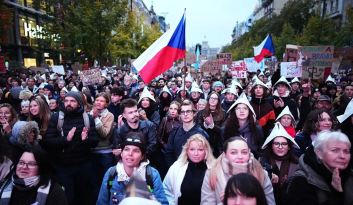
Three countries stand out for their low or very low foreign policy alignment: Turkey, Georgia and Serbia. All three are also showing signs of democratic backsliding.
“We have a few where [candidate countries] are backsliding, notably Turkey and Georgia,” a second senior EU official said. “Serbia has actually also a little bit of backsliding.”





 Studio One