 Weather today
'Centrist' politicians announce launch of new political party in Armenia

One Armenia, a recently formed political force proclaiming itself as a centrist party, on Saturday conducted its founding congress in Yerevan.
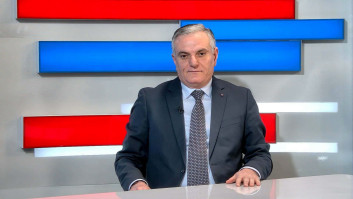
A keynote speaker of the the event, attended by opposition MPs from the Prosperous Armenia party (PAP), a former lawmaker of the Republican Party of Armenia (RPA), Armen Ashotyan, and other guests, was one of the founding members, Arthur Gazinyan, who introduced their mission and vision. He said that they came up with the idea “driven by the interest to assist in the accomplishment of the political system in Armenia” and “contribute to the formation of a new political culture and state-oriented thinking."
“The Third Republic of Armenia has entered into one of its most important and most crucial eras, as the developments which have taken place – and are still taking place – in our country now have the potential to change the turn of events. We can opt for having a powerful state, statehood, government and national institutions, reinforcing and imparting viability to the roots of national identity, or else choose another track to eventually see whether the Republic of Armenia, as a sovereign, legal, democratic and social state, will be able to resist challenges at all. And the challenges keep forcing their way ahead - both internally and externally, with rather complicated regional and geopolitical processes going on around Armenia,” he said.
Ghazinyan warned against capitalizing on the former authorities’ failures by permanently criticizing them for the existing difficulties in Armenia. “It is not cemented and strengthened by future-oriented constructive policies … The ‘anti-’ ideologies in Armenia normally attract quite a great number of supporters as opposed to the ‘pro-’ ideologies. So we have tried to shape the kind of policies that will allow only the successful, acclaimed and respectable individuals to engage in politics,” he noted.
Ghazinyan, who also heads the Yerevan State University's Center of European Studies, also voiced the progressive centrist political force’s strong opposition to ideological polarization, radicalism and extremism and conflicting forms of a political campaign. Instead, he promised to act in support of ideological restraint, and a collaborative and consensual political culture.



 Studio One