 Weather today
Robert Mapplethorpe's 'Saint And Sinners' reveals power of black-and-white photography

Bruce Mailman, 1981
In honor of Mapplethorpe's deviant imagery and fearless eye, Sean Kelly Gallery is exhibiting 54 photographs that reveal the complex dualities and ambiguities in Mapplethorpe's work.
The show is divided into 27 pairs of images, partnered for their aesthetic parallels or ideological oppositions. "Bruce Mailman" (1981) and "Christopher Holly" (1980), for example, both peek out from behind a surface, exposing a portion of their face, the Huffington Post reported. One wears a hood, the other a mask; one against a white background, the other black. Though little information is disclosed about the subjects, the viewer feels compelled to label one as hero, one as villain, though it's difficult to decipher which is which.
Some of Mapplethorpe's pairings are obvious in their message, but most aren't so black and white. In the end, the images reveal the multiplicity of interpretations lurking in a single image, no matter how straight-forward it may seem. The exhibition's title, "Saints and Sinners," toys with the idea of an unshakeable morality, aligning his formal application of lights and darks to the lightness and darkness of the human spirit.
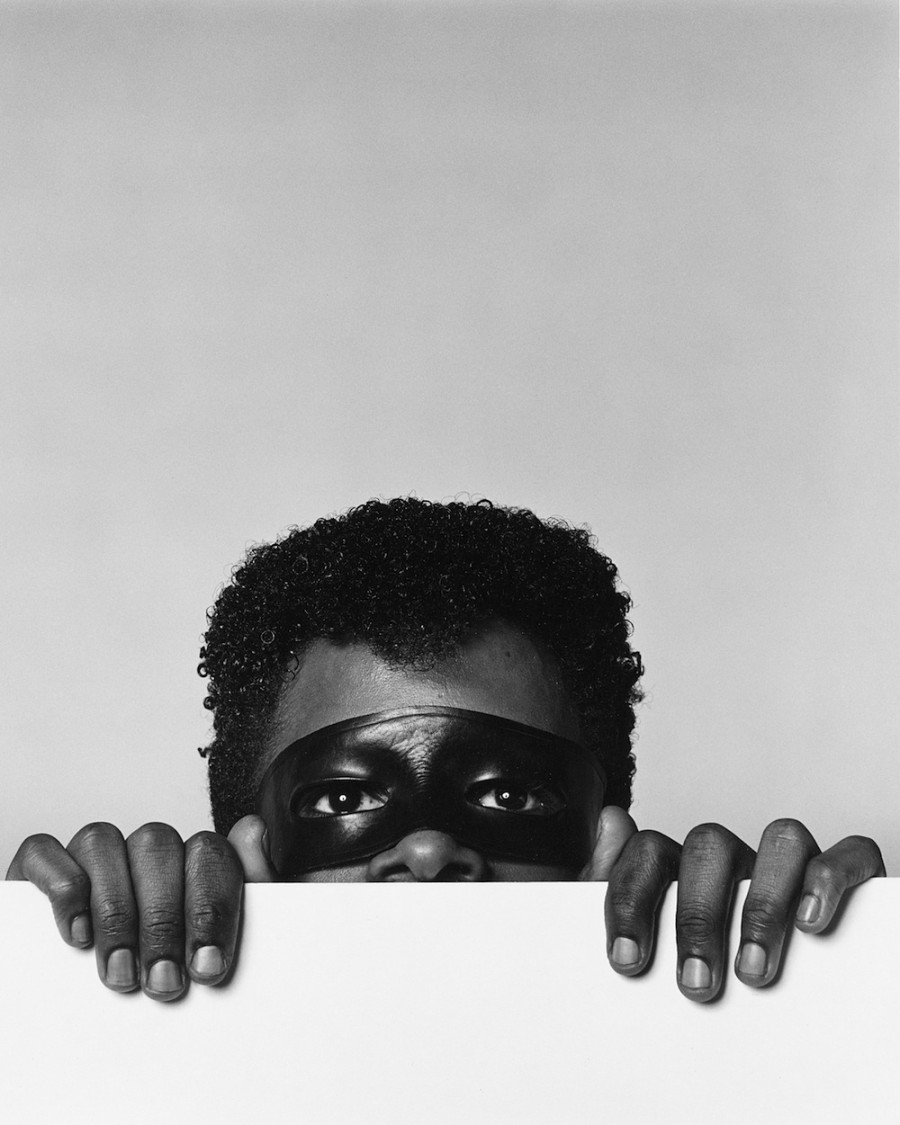
Bruce Mailman, 1981
"His photography is not so much shameless as beyond shame," The New York Times' Michael Benson wrote 25 years ago of Mapplethorpe's work. "Formally and psychologically, he was fascinated by the relationship between light and dark, black and white. Like Andy Warhol, whom he admired, he was raised a Roman Catholic and he continued to depend upon Catholic iconography and ritual: in this self-portrait, he presents himself as bishop or priest."
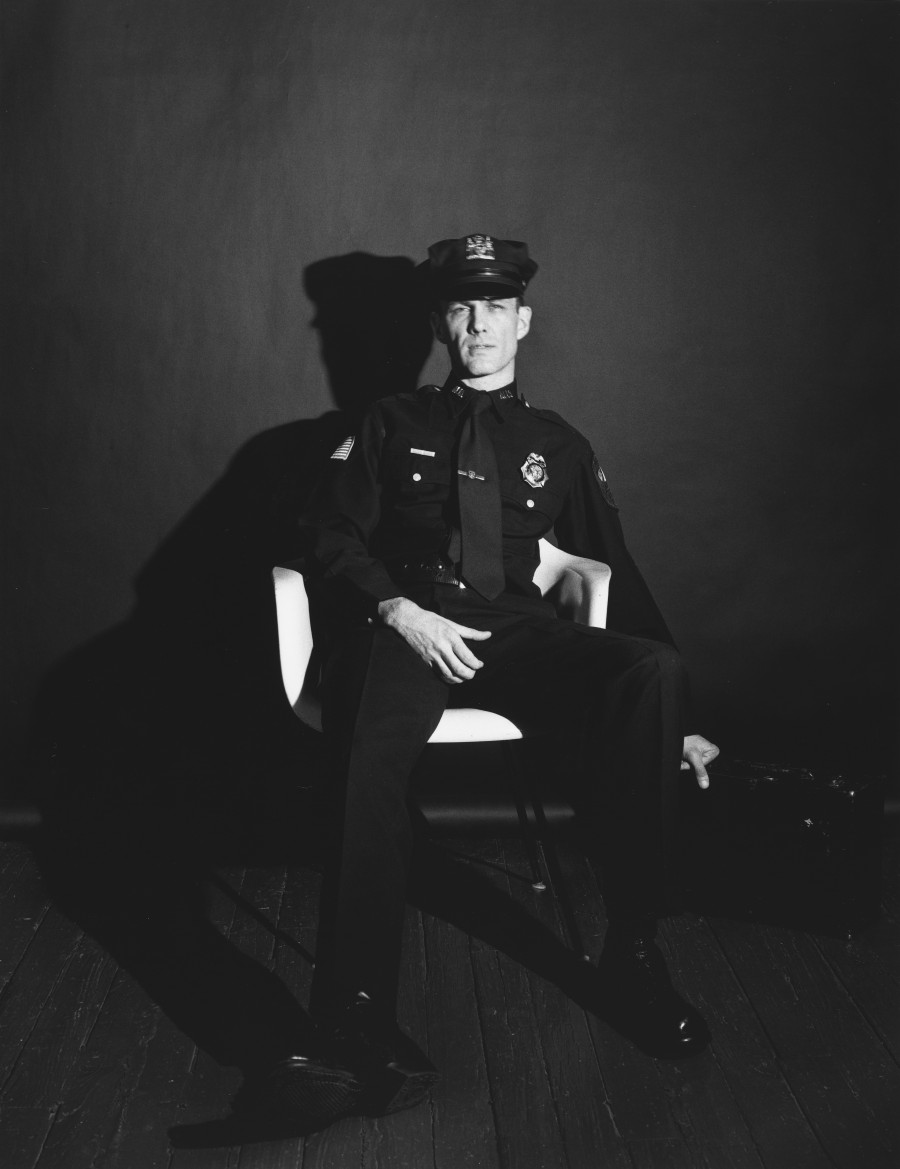
Colin Streeter, 1978
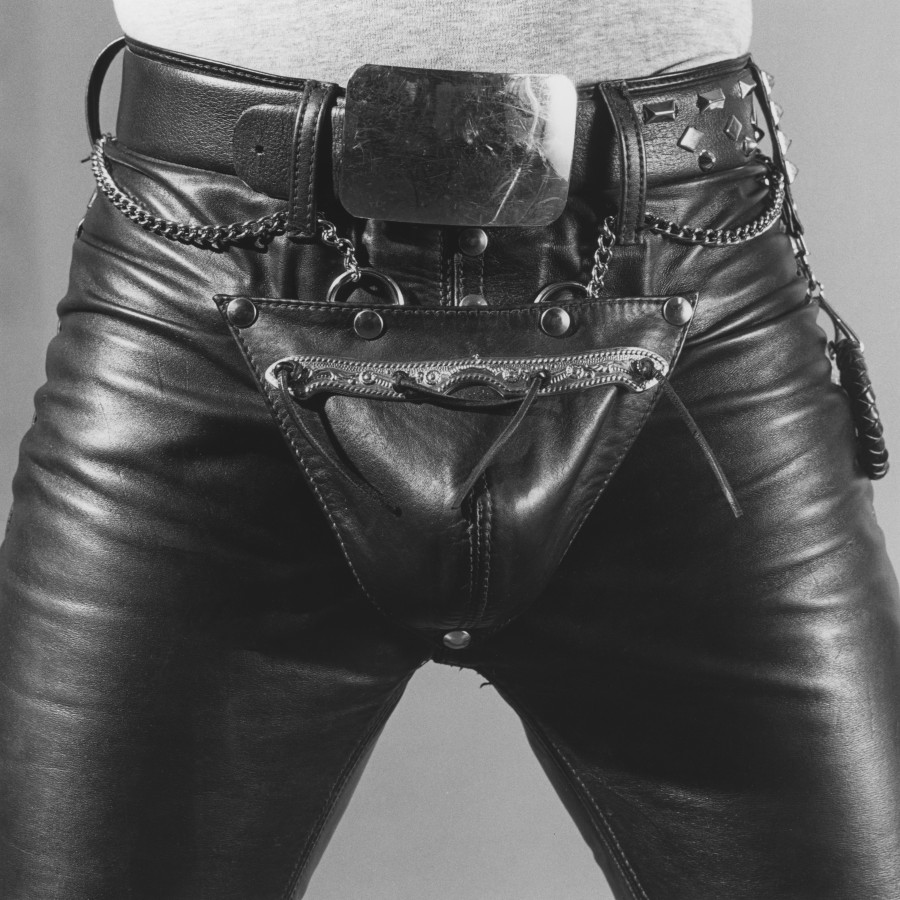
Leather Crotch, 1980








 Studio One