 Weather today
EU summit: Leaders tackle energy prices, spar over budget and unite on Ukraine

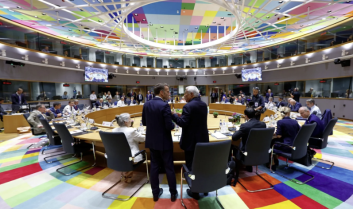
Spiralling energy prices, the EU's long-term budget and support for Ukraine in the wake of Donald Trump's latest overture to Vladimir Putin will dominate the conversation as the leaders gather for a two-day summit in Brussels.
Enlargement, hybrid warfare, economic stagnation, rising borrowing costs, trade imbalances and irregular migration will also feature in the talks.
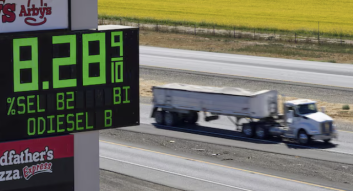
The meeting will start early on Thursday with a hotly anticipated discussion on energy prices, which hostilities in the Middle East have sent skyrocketing. Oil remains above $100 per barrel despite a coordinated G7 release, while gas trades at its highest level since winter 2022, with underground storage running below average.
The market shockwaves have rattled EU leaders, who are under mounting pressure to deliver tangible relief for households and industries, especially as temperatures cool down and the heating season begins.
Italian Prime Minister Giorgia Meloni and Greek Prime Minister Kyriakos Mitsotakis have led the charge, asking Brussels to relax the bloc's fiscal rules to allow governments to finance "temporary and targeted measures" to cushion the energy crunch.
Other countries, however, worry that excessive flexibility will promote fossil fuel consumption and discourage investments in the green transition.
Meanwhile, six member states (Austria, Germany, Italy, Poland, Portugal and Spain) have proposed an EU-wide windfall tax to capture excess profits from energy companies amid high prices. But the idea remains divisive and has not gained enough traction.
Energy will be followed by another pressing economic challenge: China.
With a €1 billion trade deficit every day, Brussels threw down the gauntlet by imposing a deadline on Beijing to deliver "tangible results" by October at the latest.
Those results emerged last week in Trade Commissioner Maroš Šefčovič's trip to Beijing, where he secured preliminary concessions on hybrid and plug-in hybrid cars, rare earths and permanent magnets, and market access for European companies.
"We're satisfied with the results, but for us, it's only a first step because imbalances are not specific to one sector – there are across the board," a senior diplomat said, cautioning implementation will be key to show whether Beijing is serious.
"Why is China agreeing to something that China has never agreed before? (Because) they're starting to realise they're killing their customers. We're not naïve."
The concessions avert, for now, an all-out trade war. Leaders are expected to call on the Commission to continue "results-oriented dialogue" with China and "urgently enhance" trade tools to retaliate if needed, according to the draft conclusions seen by Euronews.
In a sign of exasperation, Germany and France have pitched a "kill switch" to cut off China's access to the EU market if the deficit remains unsustainable.



 Studio One